Screw piling Hampshire
Screw piling in Hampshire
If your home sits on soft or filled ground, screw piling in Hampshire can steady it without heavy digging. A specialist winds steel piles into the earth and ties them to the foundations. Describe what you have noticed and find out if this approach suits your home.
- Suited to narrow side passages
- Minimal vibration during installation
- Depth decided by ground conditions

Describe what you see at home
Foundation repair options across Hampshire
Different ground conditions call for different methods. Each approach below is carried out by a separate specialist firm working on its own account, depending on what the soil beneath your home requires.
-

Subsidence survey
A specialist visits the home to examine cracks, measure movement and determine whether the foundations are shifting because of the ground below.
-

Underpinning
A specialist excavates below the existing footings and pours new concrete to deepen the foundation where the soil can no longer support the weight.
-
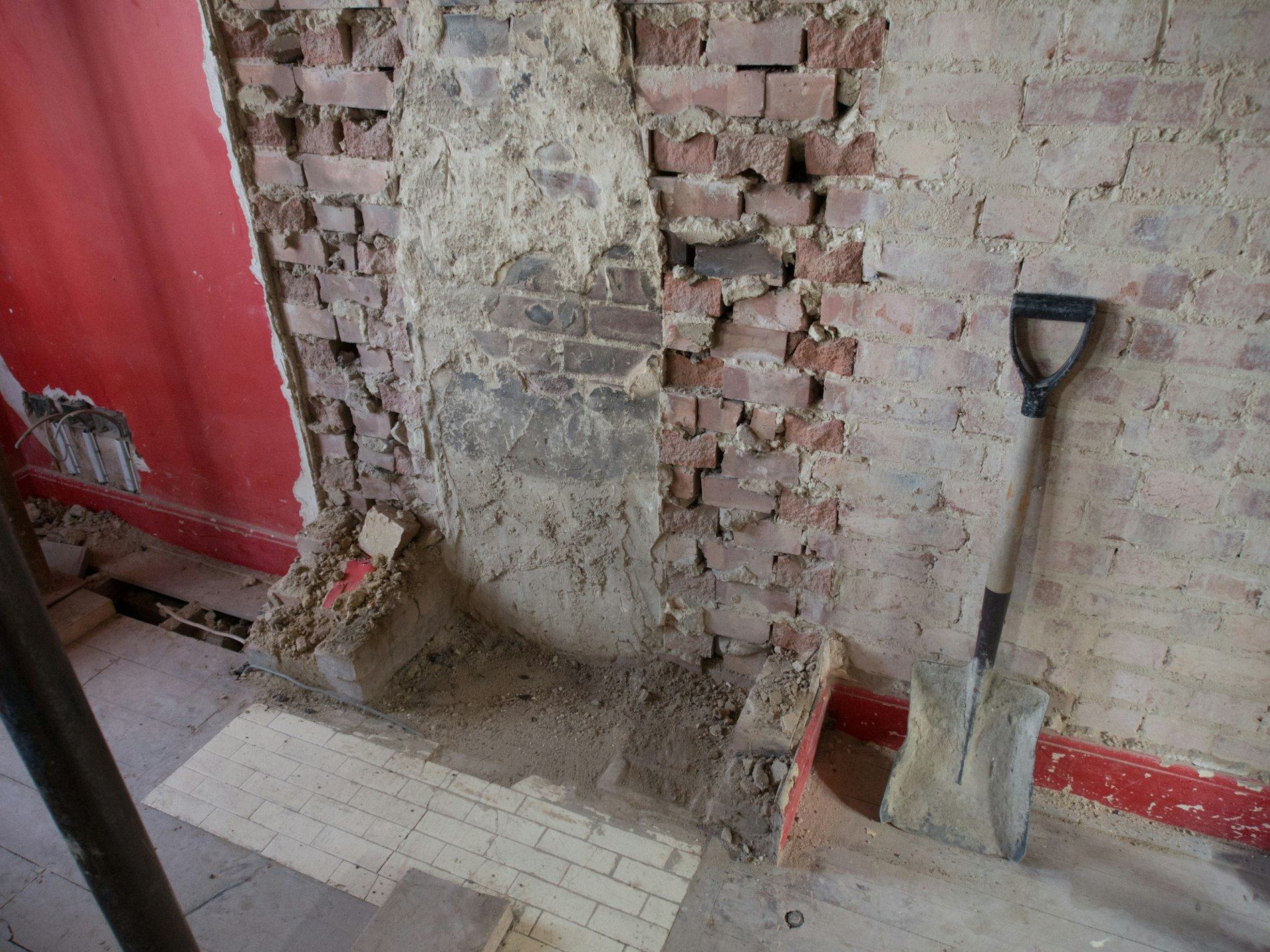
Resin injection
A specialist injects expanding resin beneath the footing to fill voids and compact loose soil, lifting settled areas back towards their original level.
-
Concrete cracking
A specialist examines cracked slabs, drives and patios to determine whether the damage stems from settlement, tree roots or surface wear.
-

Screw piling
A specialist winds helical steel piles into the ground to reach stable soil, then brackets them to the existing foundation to halt further movement.
When soft ground lets your home sink
Homes built on made-up ground, peat or soft coastal soils settle unevenly when the material beneath compresses or washes away. The walls above follow that movement, leaving visible signs that something below has shifted out of position.
- 1
Diagonal cracks near corners
Cracks wider at the top than the bottom often appear where a wall section drops relative to the rest of the house.

- 2
Doors catching on frames
A door that suddenly sticks or leaves a gap at the top suggests the frame has distorted as the floor moves.

- 3
Floors sloping to one side
A marble rolling consistently across a room indicates the floor joists are tilting with the settling ground beneath them.

- 4
Gaps around window sills
Separation between the brickwork and the window frame shows the wall has shifted away from its original position.

How an enquiry about your home works
You only need to describe what you have seen. The steps after that happen around your schedule, and you decide whether to proceed once a specialist has examined the ground.
-
Step 1
Send details of the problem
Write down where the cracks or movement are and how long you have noticed them. This information goes straight to a firm that handles this type of ground.
-
Step 2
A specialist visits your home
They examine the walls, floors and outside ground to work out whether helical piles suit the site. You just need to let them in and point out the signs.
-
Step 3
Receive findings and a proposal
The specialist explains what the ground conditions mean and sets out a plan if piles are needed. You can ask questions before deciding anything.
-
Step 4
Piles wound in and load tested
If you go ahead, the specialist brings compact equipment to wind the piles, tests each one against the required load and brackets them to the foundation.
How this site works
This site takes enquiries from homeowners who have noticed movement or cracking. Separate specialist firms carry out any surveys, repairs or piling work entirely on their own account. Nothing here represents a single contractor or a guarantee of outcomes.
- Enquiries go to independent firms with their own terms.
- No work is quoted, priced or guaranteed through this website.
- Specialists decide on site which method suits the ground beneath your home.
- You remain free to decline any proposal after a visit.
Questions about screw piling in Hampshire
Homeowners dealing with soft ground tend to ask the same things before agreeing to any work. Here is what usually matters.
- Access down a narrow passage
- Mini piling for tight access in Hampshire uses compact rigs. A specialist can often wind helical piles down a side passage less than a metre wide without dismantling fences or gates.
- Vibration felt by neighbours
- Low vibration piling near neighbours relies on torque rather than impact. The machine turns the pile into the earth quietly, so adjoining houses feel very little disturbance during the work.
- Depth on made-up ground
- Screw pile depth for residential work depends entirely on where firm soil begins. On piling on made ground, a specialist keeps winding until the torque readings confirm adequate bearing capacity.
- Load capacity worked out on site
- Torque resistance during installation tells the specialist exactly how much weight each pile can hold. Soil layers vary even across one garden, so calculations must happen while the pile goes in.
- Time needed for a small extension
- Foundation piles for an extension in Hampshire on a modest rear footprint often take a day or two to install. The exact duration depends on how many piles the design requires.
- Lifting driveways or patios
- Because the rigs are small, a specialist can frequently work through existing surfaces or beside them. They advise beforehand whether any paving needs temporary removal to reach the footing.
Areas covered around Hampshire
Enquiries come from homes across the county. Separate specialist firms operate throughout these towns and the surrounding villages, handling ground conditions ranging from chalk downland to reclaimed coastal soil.
If your town is not listed, send an enquiry anyway. Firms cover most of the county.
- Screw piling Southampton
- Screw piling Portsmouth
- Screw piling Basingstoke
- Screw piling Gosport
- Screw piling Farnborough
- Screw piling Andover
- Screw piling Winchester
- Screw piling Havant
- Screw piling Fareham
- Screw piling Fleet
- Screw piling Aldershot
- Screw piling Totton
- Screw piling New Milton
- Screw piling Eastleigh
- Screw piling Waterlooville
- Screw piling Chandler's Ford
- Screw piling Hythe
- Screw piling Romsey
- Screw piling Alton
- Screw piling Lymington
- Screw piling Petersfield
Find out if screw piling suits your home
Describe the cracks or movement you have noticed. A specialist firm will review the details and arrange a visit if helical piles might be the right answer for your ground.