Subsidence help in Hampshire
Subsidence survey for Hampshire homes
You have noticed a crack or a sticking door and want to know if it matters. A subsidence survey is how a specialist finds out. Send the details of what you see at home and receive guidance on the next step.
- No repair method chosen from photos
- Clear steps before any work starts
- Guidance for worried homeowners

Describe what you have seen
Repair methods used after investigation
Once the cause of movement is established, a separate specialist firm carries out the physical repair. The right method depends entirely on what the ground and the walls reveal during the investigation.
-

Underpinning
A specialist excavates below the existing foundation and pours new concrete to reach stable soil where the original footing has failed.
-

Resin injection
A specialist pumps expanding resin beneath the footing to compact loose soil and lift settled masonry back towards its original level.
-

Concrete cracking
A specialist stabilises cracked slabs, drives or patios that have dropped because the ground beneath them has shifted or washed away.
-

Screw piling
A specialist drives steel piles through soft fill to reach load-bearing strata, supporting homes built on made ground near the coast.
-

Flint, cob and chalk block
A specialist repairs cracks in traditional Hampshire walls built from flint, cob or chalk block using lime mortar rather than modern cement.
What you might be seeing around your home
Movement shows itself in ways that are easy to miss until they worsen. A crack does not always mean subsidence, but certain patterns and changes tell a specialist where to look first when investigating how subsidence is diagnosed in older houses.
- 1
Diagonal cracks near windows
A crack wider at one end running diagonally from a window or door corner often points to uneven settlement in the wall below.

- 2
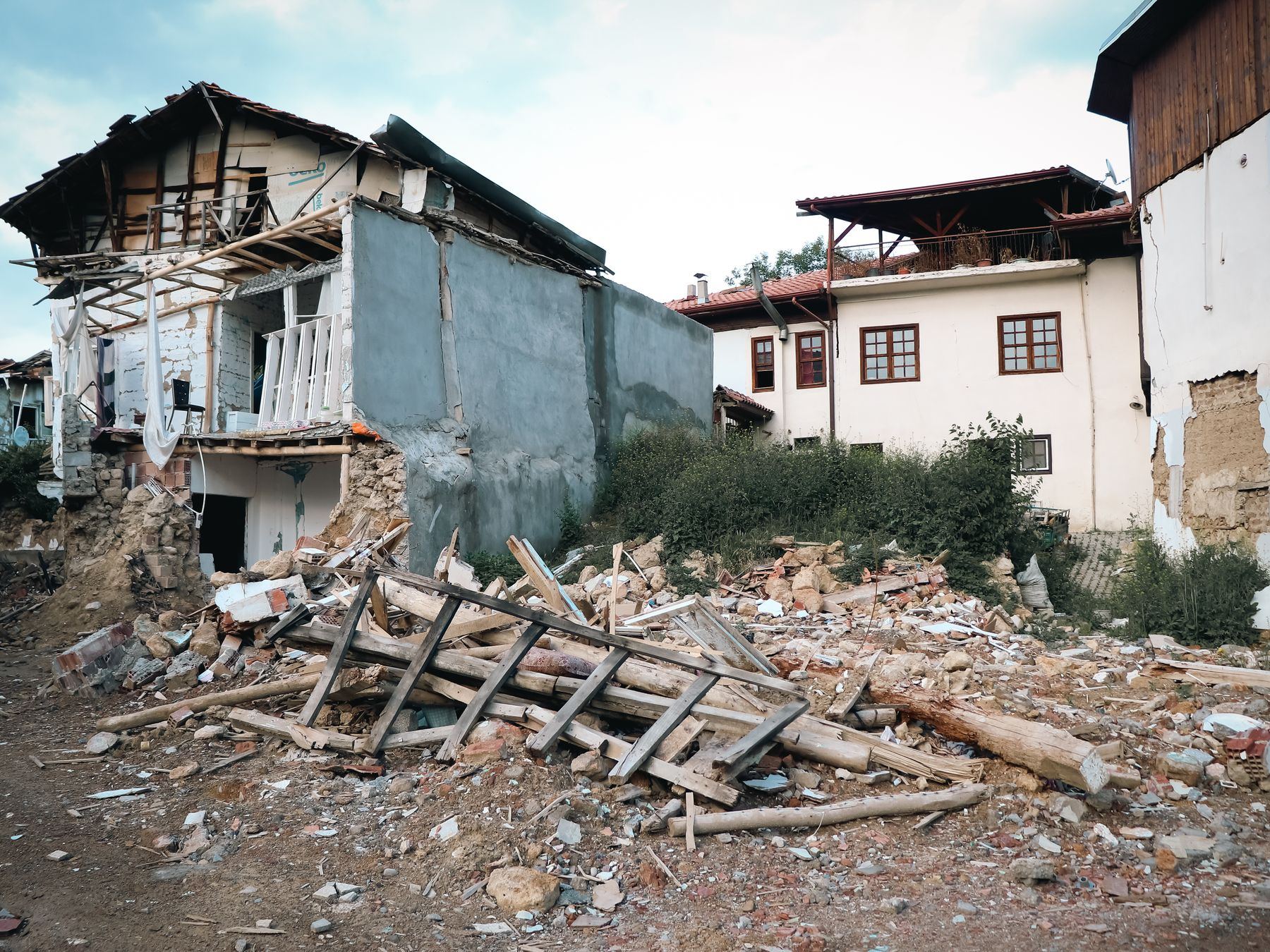
Doors that stick or jam
Frames distort as walls shift. A door that no longer closes smoothly, especially after dry weather, suggests movement nearby.
- 3
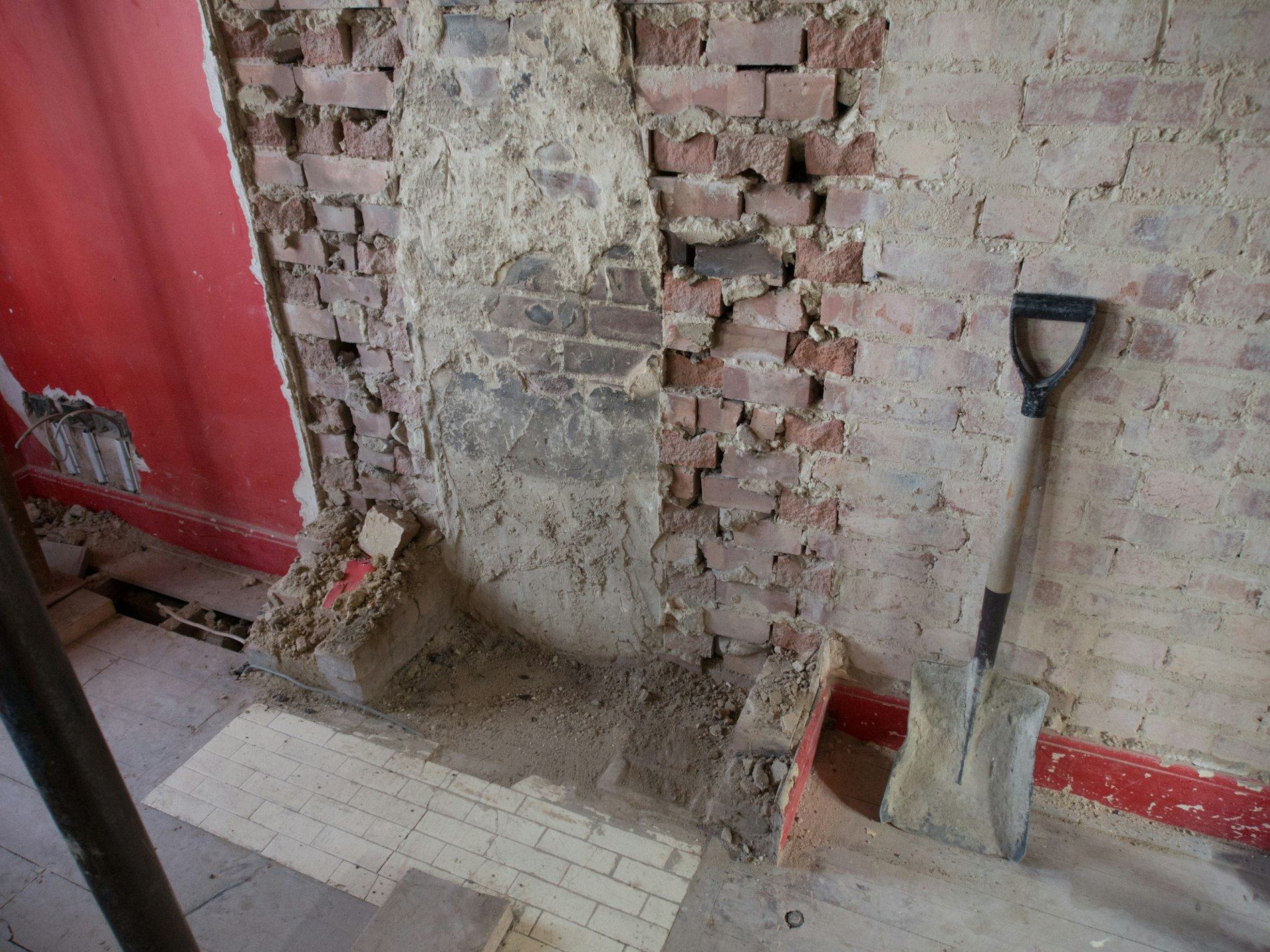
Gaps between skirting and floor
Floors drop away from walls when the ground beneath them settles. A visible gap along the skirting board can indicate this.
- 4
Cracks reopening after filling
A filled crack that splits again means the movement is still active. This pattern tells a specialist the ground has not yet stabilised.
The order of investigation
01
Visual inspection of the walls
A specialist walks around the home, maps every crack, checks their width and notes which direction they run across the brickwork.
02
Drainage and pipe checks
A drain survey for a subsidence cause involves sending a camera down pipes to find leaks that might be washing soil away from the footings.
03
Soil sampling and testing
Boreholes are drilled beside the foundation so a specialist can extract soil samples and test them for moisture content and shrinkage potential.
04
Crack monitoring over time
Glass tell-tales or digital gauges are fixed across cracks. A specialist returns over weeks or months to measure whether the movement continues.
How this site works
This site takes enquiries from homeowners who suspect movement. Separate specialist firms then carry out the investigation and any subsequent repair work on their own account. You deal directly with the firm doing the work at your home.
- Enquiries are taken here and passed to independent firms who do the work
- No repair method is recommended until a physical investigation is complete
- Photographs alone cannot establish the cause of cracking or movement
- Specialist firms operate independently and set their own terms and prices
Questions about subsidence surveys in Hampshire
These answers cover what happens during the investigation and what to expect before any repair begins at your home.
- What happens during the survey
- A structural survey for cracks in Hampshire involves mapping damage, checking drains with cameras, taking soil samples and fitting monitors to measure ongoing movement.
- Why photos are never enough
- A photograph shows surface damage but hides the soil, roots and pipes underneath. No cause can be named without physical measurements taken at the house.
- How long the investigation takes
- Initial visits happen quickly, but crack monitoring for a house in Hampshire often runs for several months to prove whether movement is seasonal or progressive.
- Drains and camera surveys
- Leaking drains wash soil away and cause settlement. A specialist sends a camera through underground pipes to rule this out before considering other causes.
- Soil samples and your garden
- A hand auger extracts small cores of earth near the foundation. It leaves holes roughly the width of a coin, easily filled with soil afterwards.
- If no subsidence is found
- Thermal expansion, lintel failure or poor construction can all produce cracks. If the ground is stable, a specialist identifies the actual cause instead.
Areas covered around Hampshire
Separate specialist firms handle investigations and repairs across the county. Soil types change from coastal silts to inland chalk and clay, so local knowledge matters when choosing who investigates subsidence claims at your address.
- Subsidence help Aldershot
- Subsidence help Alton
- Subsidence help Andover
- Subsidence help Basingstoke
- Subsidence help Chandler's Ford
- Subsidence help Eastleigh
- Subsidence help Fareham
- Subsidence help Farnborough
- Subsidence help Fleet
- Subsidence help Gosport
- Subsidence help Havant
- Subsidence help Hythe
- Subsidence help Lymington
- Subsidence help New Milton
- Subsidence help Petersfield
- Subsidence help Portsmouth
- Subsidence help Romsey
- Subsidence help Southampton
- Subsidence help Totton
- Subsidence help Waterlooville
- Subsidence help Winchester
If your town is not listed, send an enquiry anyway. Firms cover most of Hampshire.
Get help with suspected movement at your home
Describe the cracks or changes you have noticed. Receive guidance on whether a subsidence survey is the right next step for your house.